Key Points
- Amaryllises miss bloom due to energy issues and dormancy issues.
- Providing your amaryllis with enough light during the growing season is crucial to reblooming.
- Forcing dormancy for eight to 10 weeks in a cool, dry location prior to blooming is also essential.
So, the holiday season has officially passed, and the amaryllis bulb you purchased for its iconic holiday bloom never produced as expected. What now? Before you chuck it away and swear off amaryllises all together, you should know that it's easy to fix for next year—and you can reset the bulb.
First, a quick overview on amaryllis plants: These tropical flowers are native to Central and South America, where they experience consistently warm, humid conditions and mild, frost-free winters.
In their natural cycle, they alternate between active growth and rest, typically blooming once or twice a year, usually in the spring. During non-blooming periods, the bulb focuses on producing tall leaves that capture energy and store it for the next flowering phase.
Next, we'll break down the most likely reasons your amaryllis didn't flower and share expert-backed tips to help revive it so it's ready to put on a show next winter.
The Most Common Reasons Your Amaryllis Didn't Flower
According to Tim Pollak, manager of Plant Production at the Chicago Botanic Garden, there are two main reasons an amaryllis bulb won't flower.
1. **Not enough energy:** If energy is the issue, it typically comes down to a lack of light or fertilizer (or both) during the vegetative state, when the bulb is preparing for the next bloom.
2. **A dormancy period that wasn't long enough:** If dormancy is the issue, the bulb may not have received the proper environmental cues to trigger blooming, including the crucial eight to 10-week period of cool, dry temperatures, he says.
If this is your first year growing amaryllis, these mistakes were likely made before you purchased your bulb. While unfortunate, this doesn't mean your amaryllis is destined for the trash can.
You may still be able to trigger blooms for an early spring show if your bulb is still dormant (no leaves or flowers), or take steps to ensure the bulb is healthy and ready to bloom next winter.
Steps to Take Now for Blooms Next Winter
While amaryllis are tropical plants, a period of cooler, drier conditions (typically eight to 10 weeks) is essential to trigger blooming. Indoors, those environmental cues don't happen on their own and must be created manually, especially if you're re-upping your bulb for the following year.
Bulbs sold in fall have already been carefully conditioned, or cold-stratified, for about eight to 10 weeks to ensure they flower right on cue in late fall or early winter. If you plan to keep your amaryllis after its first bloom, replicating this rest period—along with proper light, watering, and feeding during the growing season—is key to encouraging another show the following year.
Light Exposure
Your amaryllis needs several hours of direct light daily during spring and summer.
"The more light the leaves get, the more energy they'll have to channel into healthy growth and lots of big, beautiful flowers," certified horticulturalist Peggy Anne Montgomery says.
Remember: These plants are native to Central and South America, where they are accustomed to long sunny days. Indoors, this means your amaryllis should receive several hours of direct light each day during the spring and summer. A sunny windowsill is ideal.
Temperature Control
In addition to light, keeping the bulb at the right temperature and providing it with lots of fertilizer are also important. During the growing season, amaryllis appreciate warm temperatures. Average household temperatures are perfect, but try to keep them away from drafty air conditioning vents, if possible, as these can chill them.
Fertilizer
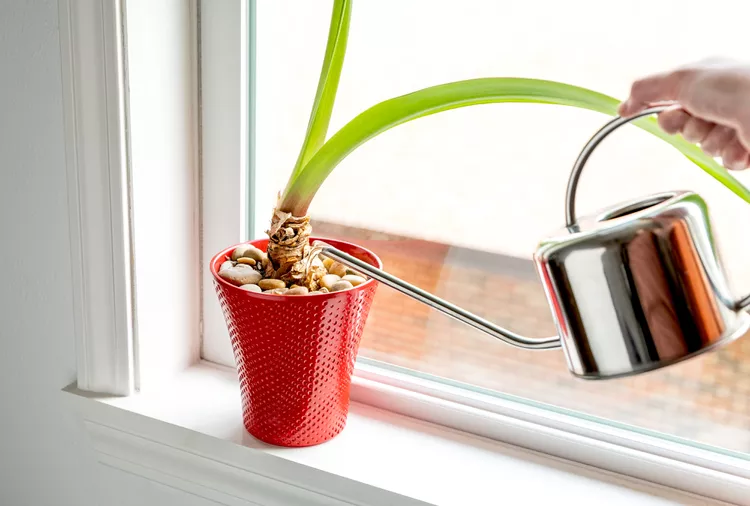
Fertilize regularly during spring and summer with a general-purpose houseplant fertilizer, and water as needed.
Forced Dormancy
You should start forcing dormancy about three to four months before you want your amaryllis bulb to bloom. Stop watering and expose the bulb to cool temperatures—ideally under 55 degrees Fahrenheit—to initiate dormancy. The foliage will gradually begin to die back, and once it's completely dead, you can cut the old leaves away, leaving the bulb on its own.
For those looking for a show of holiday blooms, this process begins in early fall, as temperatures naturally drop and the days start getting shorter.
"Some people like to keep the bulb in the dark, but that's not necessary as long as it stays cool," Montgomery says.
After eight to ten weeks, you can bring the bulb out of its cool location and resume watering. According to Pollak, you can expect blooms about four to six weeks after your amaryllis bulb is brought out of dormancy.
Pollak says he loves growing several bulbs (including different varieties!) at once and purposely staggering their bloom dates for a consistent show of flowers all winter long.