Key Points
- With the right care, poinsettias can live over 20 years and bloom again each winter.
- To keep them thriving, toss the foil wrap, give them bright light, and water only when the soil feels dry.
- Keep your poinsettia to save money, reduce waste, and add a plant to your collection.
In the United States alone, about 70 million poinsettias are sold every year around Christmas. But most of those poinsettias are treated like short-term decorations and thrown in the trash after the holidays.
However, poinsettias are actually long-lived perennials that can be rewarding to grow as houseplants or in the garden. Here's how you can grow poinsettias indoors and out, as well as simple ways to extend the life of your plants.
Do Poinsettias Come Back Every Year?
Native to Mexico and Central America, poinsettias grow perennially in warm climates and can be kept outdoors year round in USDA growing zones 9 through 11. In colder areas, poinsettias can be cultivated as annuals or kept indoors as houseplants.
With proper care and maintenance, these plants can survive for 20 years or more, and they can even be tricked into reblooming just in time for the holidays.
Proper Poinsettia Care as a Perennial
In order to keep your poinsettia happy and blooming, the decorative foil is the first thing that has got to go.
"These plants really hate to have wet feet," plant expert Abby MacFarland says. "Warmth is important as well. Cold and wet is the quickest path to the demise of your holiday plant."
She also recommends keeping your plant in bright light and temperatures between 65 and 70°F, and watering the plant only when it is dry.
Whether you're planning to grow poinsettias outside or in your home, these plants need the right growing conditions to thrive:
Lighting
Poinsettias grow best in bright, indirect light. Outdoor plants should receive at least four to six hours of sun per day, while indoor plants should be happy under a grow light or in an east, west, or south-facing window.
Temperature
Locations that stay around 65 to 70°F are ideal for indoor poinsettias, while outdoor plants die back if temperatures fall below 50°F. Indoor poinsettias often grow best if they're placed outdoors in summer, but they should be brought back inside before fall.
Watering
Poinsettias wilt quickly in dry soil, but they're also vulnerable to root rot. To avoid these issues, water your plants only when the top of the soil feels dry.
Fertilizing
Outdoor poinsettias don't need much fertilizer as long as they're provided with an annual application of compost in spring. Indoor plants should be fertilized from late spring through early fall with a monthly dose of diluted, liquid organic fertilizer.
Repotting or Transplanting
Indoor poinsettias should be repotted out of poorly draining pots as soon as possible, while outdoor plants should only be transplanted outside when temperatures are above 50°F. For best results, choose a rich potting mix and amend garden soil with compost before planting.
4 Tips to Help Your Poinsettia Thrive
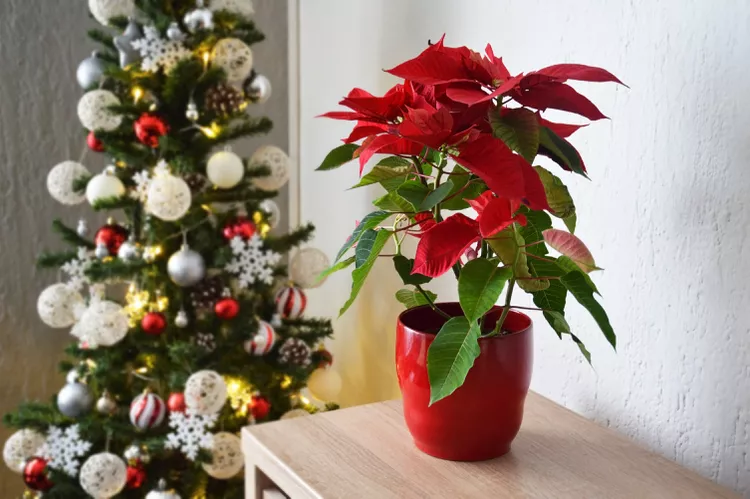
Poinsettias are mostly known for their colorful, modified leaf structures, also called bracts. These plants bloom when the days grow short in fall and they can be tricked into reblooming by reducing light levels and lowering the temperature.
If you want to keep your poinsettias happy throughout the year, here are a few more tips to try.
Prune as Needed
When the colorful bracts on poinsettia plants fade, prune them away by cutting the bare stems at a leaf node. Throughout the growing season, pinch your plant's stems back to a leaf node for a more compact and bushy look.
Prevent Crispy Leaves
Indoor poinsettias can sometimes develop dry leaves due to low humidity levels. But this can be prevented by adding a humidifier or a pebble tray beneath your plant.
Check for Pests
Whether you grow poinsettias outdoors or in your home, keep a lookout for common pests, like mealybugs and aphids. If you find any pests, treat them with an organic insecticidal soap spray.
Provide Proper Spacing
Although indoor poinsettia usually stays relatively compact, outdoor plants can grow over 10 feet tall. To boost airflow and prevent diseases like bacterial leaf spots, make sure outdoor plants have plenty of room to spread out and space multiple plants at least 3 feet apart.