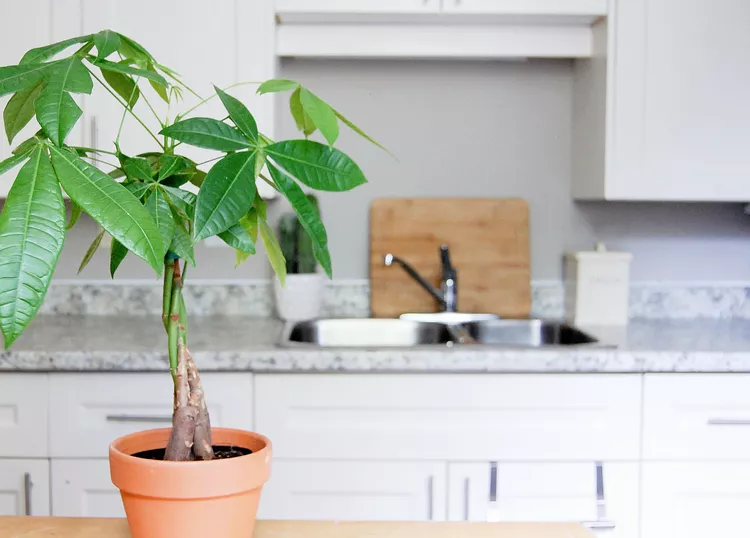
The money tree, known scientifically as Pachira aquatica, is appreciated for its vibrant green, palm-like leaves and positive feng shui attributes. Sometimes, these attractive leaves may turn yellow due to factors like overwatering, excessive light, or low humidity. Recognizing these causes early can help restore your plant to good health with simple adjustments in care. Understanding the basic needs of your money tree ensures it remains a thriving, low-maintenance addition to your home.
Causes of Yellow Money Tree Leaves
Here are six reasons your money tree's leaves could be turning yellow.
Overwatering
Too much water is a common cause of yellow leaves in houseplants such as the money tree. Watering too often, planting in heavy soil, using a pot with no drainage hole, or letting plants sit in a saucer full of water all contribute to root rot. This issue affects your plant's ability to take up nutrients and water from the soil and, if left untreated, risks killing your plant.
Too Much Light
A money tree grows best with bright, indirect light (the feng shui money corner of your home usually meets these conditions). Too much light—or strong, direct sunlight on the plant, especially from a south-facing or west-facing window—causes pale, yellowish patches to appear on otherwise healthy green leaves.
Not Enough Humidity
Money trees are native to the tropics in Central and South America and thrive in swampy areas. These plants grow best in a space with at least 50 percent humidity but indoor conditions are usually much drier, especially in winter. Overly dry conditions or blowing air from ventilation systems causes your money tree's leaves to get crispy brown edges before wilting and dropping off.
Inconsistent Temperature
If your money tree is located near a heating vent, air conditioning unit, or a drafty window or doorway, temperature fluctuations could cause yellow leaves. The plant prefers consistent warm temperatures between 65 and 85 degrees.
Pest Infestations
Common houseplant pests like spider mites, mealybugs, and scale can damage your money tree. These insects feed by sucking the sap from plant parts, which causes leaves to turn yellow.
Normal Plant Growth
The occasional yellow leaf on your money tree is completely normal. As the plant grows, older leaves naturally yellow, die, and drop off. If the plant is putting out new growth, you've been giving it the proper care and conditions, and there aren't other signs of problems, a yellow leaf here isn't a cause for concern.
How to Treat Yellowing Leaves on Money Tree
If you suspect the yellow leaves on your money tree are a symptom of a problem other than normal growth, try to identify and remedy the issue as soon as possible. Regardless of the cause, trim away yellow, brown, or otherwise damaged leaves with sharp, sterilized pruners or scissors. This lets the plant focus on its healthy growth. Here's how to treat specific problems:
- Overwatering: Stop watering the plant and let the soil fully dry out before watering again. In extreme cases, repot the plant, remove any rotten roots, and replant it in fresh soil.
- Too much light: If you find pale spots on healthy foliage and the plant is in a very sunny spot, the culprit could be sunburn caused by too much light. Move the plant further from the light source to a place that still gets some indirect light or put up a sheer curtain to filter the sunlight.
- Not enough humidity: Create a more humid microclimate by grouping your money tree with several other humidity-loving plants. You can also place the plant on a pebble tray or run a humidifier in the space to add moisture to the air.
- Inconsistent temperature: Relocate the plant to a space with a consistent temperature, keeping it away from windows, doors, and air vents.
- Pest infestations: Inspect your plant for flat brown spots and sticky sap on leaves and stems (scale), cotton-like masses (eggs laid by mealybugs), or thin webs along leaf veins and the axils where leaves meet stems (spider mites). Cover the plant's pot and soil, then spray the bugs off the leaves with water. Treat the plant with neem oil to keep pests at bay. Cut off and throw away very infested plant parts, and quarantine your money tree away from other houseplants until it makes a full recovery.
Preventing Yellow Money Tree Leaves
The best way to prevent your money tree's leaves from turning yellow is to give it consistent care, maintain the proper growing conditions, and look out for common problems like pests. When you do spot an issue, act quickly to keep the problem from spreading or progressing. Finally, remember that the occasional yellow leaf on a healthy money tree is nothing to worry about.
FAQ
Can yellow money tree leaves turn green again?
Once a leaf has turned yellow, it has lost its chlorophyll and won't turn green again. But if you correct the underlying cause, the yellow leaves will soon be replaced with healthy new green leaves.
How often should you water a money tree?
Water the plant whenever the top inch of soil is dry. It needs more frequent watering in the spring and summer than in the fall and winter. You can use regular water; the plant does not need distilled water.
How can you tell if a money tree is overwatered or underwatered?
Yellow leaves usually indicate overwatering, whereas curled and discolored (often browning) leaves signal that the plant does not get sufficient water.
How much sunlight does a money tree need?
To thrive, the plant needs at least six hours of bright to medium indirect sunlight every day.